


Clinician Support
At UDRH SW, we are proud to support healthcare professionals at every stage of their rural career, from new graduates to experienced clinicians. Through professional development, clinical supervision training, peer support, networking opportunities and research collaboration, we help strengthen and grow the South West health workforce.
Explore this page to discover upcoming events, professional development opportunities, resources and the latest news for healthcare professionals practicing across the South West.
Grow your skills as a supervisor or preceptor
Take our Teaching on the Run course to build your confidence and skills in becoming a supervisor, preceptor or facilitator of health students or newly qualified health professionals.
Research opportunities and initiatives
Do you have an enquiring mind? The UDRH SW is supportive of growing the rural research capacity in the South West.
Workshops and Events for Health Professionals
We’d love to see you at one of our upcoming events, made for Health Professionals like you.

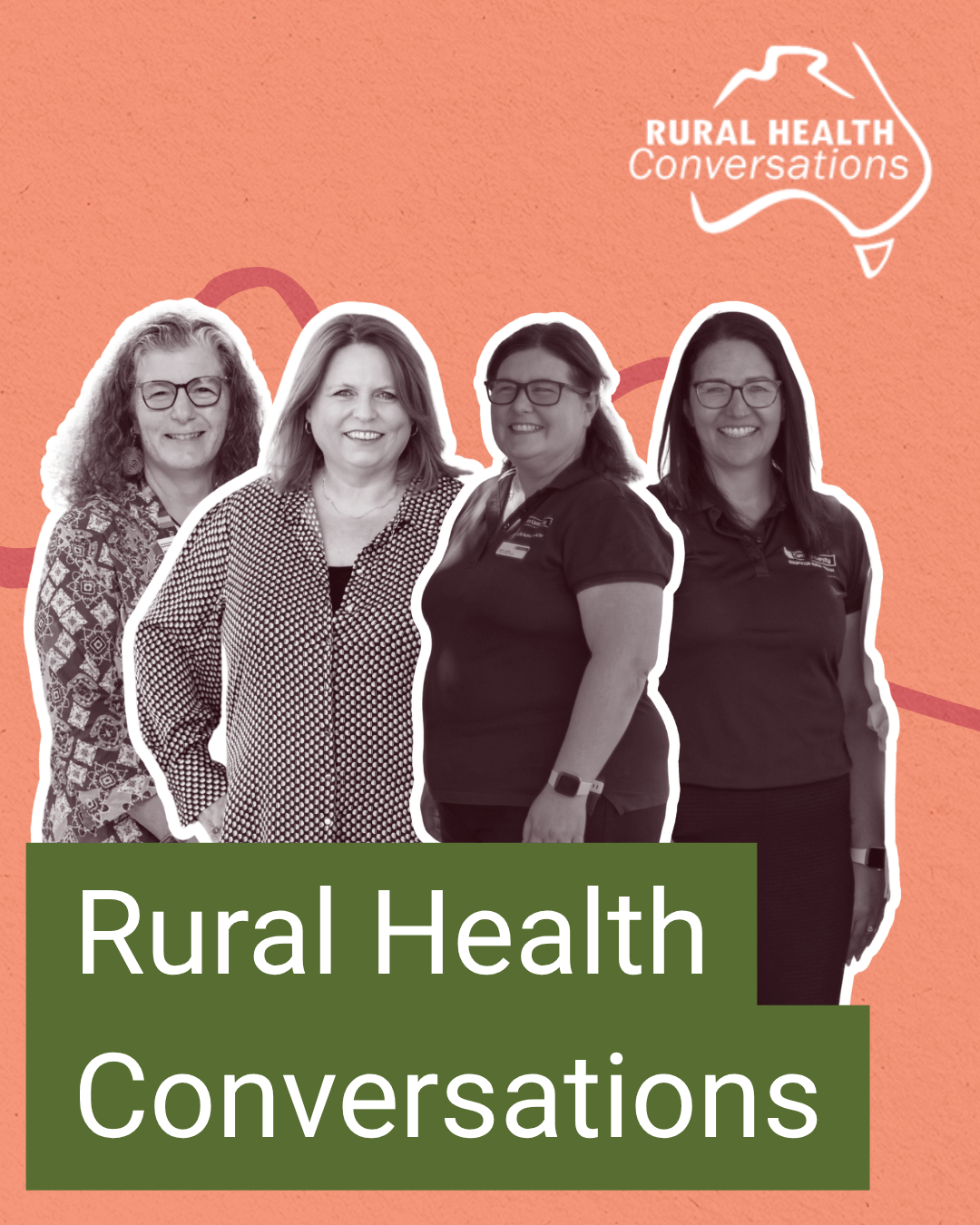
Rural Health Conversations Podcast
Rural Health Conversations features conversations with rural health professionals about the experiences, opportunities and challenges of supervising healthcare students on rural placements.
Guests share practical insights and real-world perspectives on supporting student learning, navigating supervision in busy clinical settings and contributing to the development of the rural health workforce.
This Podcast series was produced by the four Western Australian University Departments of Rural Health (WA UDRHs) with support from the Australian Rural Health Education Network (ARHEN).

Resources for Rural Healthcare Supervisors
Explore a range of UDRH SW and external resources that support Healthcare Supervisors.
UDRH SW Resources
External Resources
Rural Health West: South West Health Professionals Network
Allied Health Students Work Integrated Learning (WIL) during Rural Clinical Placement
Going Rural Health: Connecting Organisations with Students
ClinEd Aus: Enabling Clinical Education Skills
Three Rivers Department of Rural Health
Curtin University: Strategies for fieldwork supervisors

Cultivate South West
Facilitated by UDRH SW, Cultivate South West is designed for new healthcare graduates working across the South West.
The program aims to:
- Enhance confidence as a health professional
- Build competence as a rural practitioner
- Foster interprofessional skills and networks with other health professionals
- Facilitate thinking about future career
- Build community connections and social integration
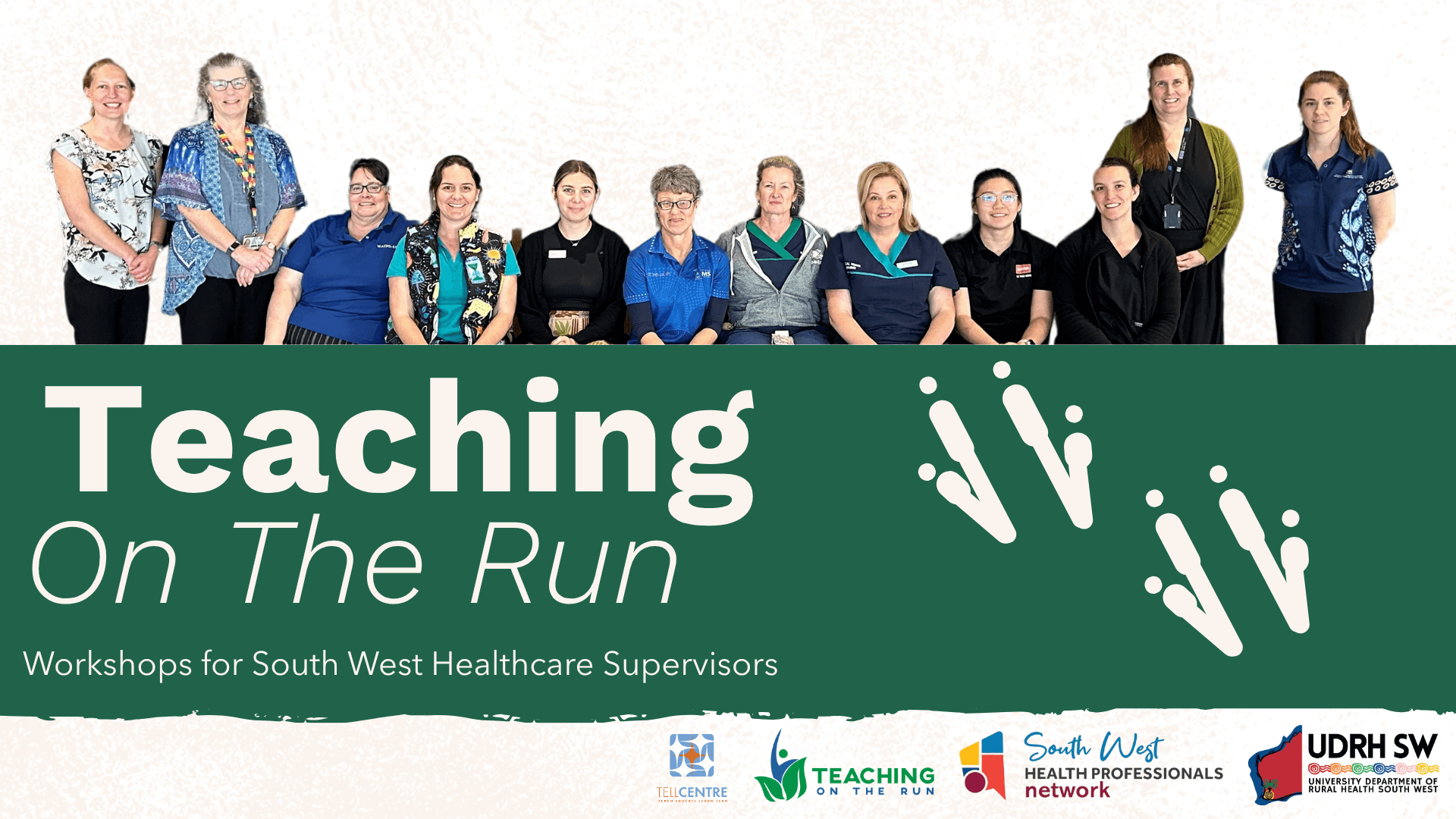
Teaching on the Run
Teaching on the Run is a program for nursing, midwifery and allied health professionals who are keen to learn skills to support students for clinical placements or junior colleagues in the workplace.
The UDRH SW proudly delivers this program both online and in person in collaboration with South West Health Professionals Network and the TELL Centre. TOTR covers a range of topics:
Your Questions about Rural South West Placements
Have another question about facilitating quality rural placements in the South West? We’d love to hear from you.
Why are quality Rural Placements Important?
A successful high-quality student placement can benefit your site by providing opportunities for future staff recruitment. We know that students who have enjoyed their rural placement are more likely to return to work rurally after graduation. We know how difficult it can be to recruit staff to rural health services, sowing the seeds in students is one way of overcoming this challenge.
Students can also bring obvious benefits for your clients, their families and your local community, in terms of the potential increase in the type and frequency of your service delivery. Throughout the clinical education process, you are both a teacher and student. Supervising students can enhance your own learning, reduce professional isolation for those in sole positions or remote areas, and enhance your skills in the areas of teaching, reflective practice and collaborative teamwork.
A high-quality rural placement is aligned with the students’ curriculum, where students are appropriately prepared for the placement and all risk management requirements are in place. The site is committed to hosting students, has a safe learning environment and there is support from the multi-disciplinary team. The supervisor has access to training, resources and support to prepare and plan for placements including time in their workload. The supervisor is welcoming, provides orientation, gives clear expectations and fosters a supportive teaching and learning environment. The supervisor provides high quality supervision, scaffolding student reflection, seeking and providing feedback, fostering autonomy and enabling the student to develop and apply competencies.
Why become a Rural Supervisor, Preceptor or Clinical Educator?
There are benefits to taking on the role of supervisor, preceptor or clinical educator. The chief of these is you are investing in your community’s future health workforce, because we know that students who have rural placements are more likely to work rurally after graduation. Other benefits for you are:
Keeping in touch with the latest evidence-based practice as students share their learning and readings with you. Student questions can also stimulate your own further learning and reflection.
- Access to supervisor training, often free or at low cost, run by universities or by the UDRH SW can be part of your CPD requirements for your health professional registration.
- Students often bring enthusiasm and energy to a workplace, renewing your own passion for your career.
- Developing your supervision skills can support your career aspirations as you build leadership skills. Supporting students also shows your commitment to your profession and the future workforce.
- Extended professional networking opportunities as you engage in workshops and liaise with universities and the UDRH SW. You can also extend your networks by sharing student supervision across disciplines or even organisations.
- Fostering a passion for rural practice in students and shaping the next generation can be motivating and meaningful as a professional legacy.
How can I support my staff to host students?
Supporting staff to supervise students is key to building placement capacity and strengthening the future rural health workforce.
Workload is often the biggest barrier, particularly in the early stages of a placement. Providing supervisors with a reduced workload where possible and encouraging a team-based approach to student learning can help create a positive experience for both staff and students.
Recognising and rewarding staff who supervise students is also important. Supporting professional development, acknowledging supervision as a leadership skill and celebrating staff contributions can encourage ongoing involvement.
UDRH SW provides free clinical supervision training, practical resources and tailored support to help your team confidently host students. We also recognise outstanding supervisors each year through our annual Supervisor Recognition Awards.
I'm not sure about the benefits of facilitating a clinical placement?
Hosting a student on clinical placement is a valuable investment in both your own professional development and the future of the rural health workforce.
Supervising students provides an opportunity to strengthen your clinical knowledge, develop your teaching and leadership skills, and reflect on your own practice. For health professionals working in sole practitioner roles or rural and remote settings, mentoring students can also foster connection, reduce professional isolation and encourage collaborative learning.
Clinical placements can also bring lasting benefits to your workplace. Students contribute fresh perspectives, enthusiasm and additional capacity, while successful placement experiences can help build a future recruitment pipeline by encouraging graduates to return to the region to work.
UDRH SW is here to support you every step of the way. We offer free professional development to help build your confidence in clinical supervision, including training in planning learning experiences, clinical teaching, assessment and effective communication. Our Discipline Advisors, located throughout the South West, can also provide advice, resources and connect you with university placement coordinators.
To find out more, contact the UDRH SW team at udrhsw@ecu.edu.au.
How can I develop placement opportunities at my workplace?
Creating student placement opportunities is a rewarding way to support the future rural health workforce while providing valuable professional development for your team. With some planning and the right support, placements can become a positive and sustainable part of your workplace.
UDRH SW can help you identify placement models that suit your service, whether you’re looking to host a student for the first time or expand your existing placement capacity. We encourage innovative approaches and enjoy working with health services to create meaningful learning experiences that benefit both students and workplaces.
To help you feel confident in supporting learners, we offer free professional development in clinical supervision, including training in planning learning experiences, clinical teaching, assessment and effective communication. These opportunities are designed to equip supervisors and preceptors with the skills to support students and early career health professionals.
If you’d like to explore placement opportunities at your workplace, we’d love to hear from you. Contact us to start the conversation.
I've never hosted a student before, how can I get started?
If you’ve never hosted a student before, we’re here to help.
The UDRH SW Discipline Advisors work across the South West and can support you to explore student placement opportunities that suit your workplace. Whether you’re a sole practitioner, private practice, community service or larger health organisation, we can help you determine what’s possible.
We understand that taking on a student can raise questions about supervision, workload and logistics. Our team can work with you to identify practical solutions and provide guidance to help you confidently welcome students into your service.
We also support supervisors and preceptors to build their skills through a range of professional development opportunities, including workshops, online learning, podcasts and practical resources. Tailored supervision training can also be delivered at your workplace for groups of six or more staff.
Hosting students is a rewarding way to contribute to the future rural health workforce, and we’re here to support you every step of the way.
Get in touch
Join the UDRH SW today or collaborate with us and be part of the rural health workforce solution. Together, we can work towards building a stronger and more sustainable rural health workforce.
Acknowledging traditional custodians
We acknowledge and pay our respect to Aboriginal and Torres Strait Islander People as the first inhabitants of the nation, and who are the traditional custodians of the lands where our staff and students live, learn and work. We acknowledge the strength and resilience of our First Nations people and endeavour to work together for the benefit of all.