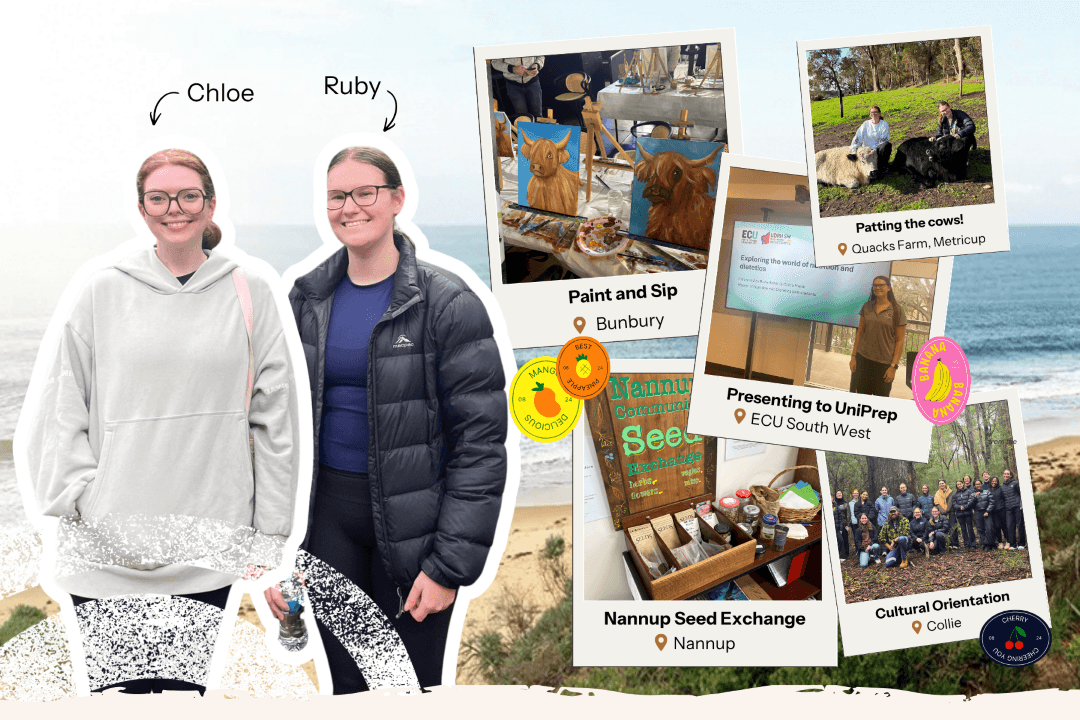
As they prepare to graduate from the Master of Nutrition and Dietetics program at Edith Cowan University (ECU), Chloe and Ruby are finishing their final Community and Public Health placement with REED (Regional Early Education and Development) supported by the University Department of Rural Health South West (UDRH SW) during their six week immersion in regional life, multidisciplinary learning and community-driven nutrition initiatives.
The placement provided the Perth-based students with a unique opportunity to experience rural practice firsthand while contributing to projects designed to improve nutrition outcomes for families in the South West.
Working alongside the UDRH SW team, Chloe and Ruby collaborated with a range of health professionals including speech pathologists, occupational therapists, physiotherapists and dietitians, gaining valuable insight into the collaborative nature of rural healthcare.
One of the highlights of their placement was travelling regularly to Nannup, where they were placed at the REED Centre to better understand the nutrition needs of local families and the unique challenges faced by rural communities.
Through conversations with REED staff, the Nannup Community Resource Centre, Shire representatives, the Mobile Foodbank, WA Country Health Service dietitians and other local stakeholders, the students explored issues surrounding food accessibility, food availability and nutrition priorities within the community. This information informed a comprehensive situational analysis, which was used to develop practical recommendations and resources tailored to local needs.
Their work resulted in several initiatives designed to support both families and educators.
- A parent resource was developed featuring evidence-based information on the Australian Dietary Guidelines, age-appropriate serving sizes, creating positive mealtime environments, managing fussy eating, seasonal produce, pantry staples and practical tips to help reduce mealtime stress.
- For educators, the pair created a toolkit containing nutrition fact sheets, role-play scripts, future activity ideas and a set of “Mealtime Magic” cards. The interactive flip cards encourage children to explore foods through curiosity rather than judgement, prompting conversations about the foods in their lunchboxes and where they come from.
- The students also delivered engaging activities with children at the centre, including sensory fruit and vegetable guessing games, seed planting, placemat-making and interactive storybook sessions using dialogic reading techniques to encourage healthy eating habits and food exploration.
Chloe and Ruby said the placement had broadened their understanding of rural dietetic and interdisciplinary practice and highlighted the value of community partnerships.
“A main part of our placement has been spending time in the UDRH SW office, collaborating with the staff and working with the wider team, including speech pathology, occupational therapy, physiotherapy and more,” they said.
“Working in the South West has been full of new experiences, great opportunities and the chance to work with a wide range of people from different professions.”
The students also took part in UDRH SW’s Cultural Orientation, travelling to Yallingup to learn about the significance of Country, culture and connection to health for Aboriginal people. The experience included a guided tour of the caves and sharing a meal featuring local South West produce, providing valuable cultural knowledge to inform their future dietetics practice.
They further strengthened their understanding of culturally safe healthcare through educational sessions and a shadowing experience with the South West Aboriginal Medical Service.
Outside of placement, Chloe and Ruby embraced life in the South West, attending local community events and making the most of opportunities to connect with the region and its people.
As they complete their studies and prepare to begin their careers as dietitians, their placement demonstrates how rural experiences not only equip students with practical skills, but also foster meaningful connections with communities.